Ancient Egyptian children brushed their teeth with twigs, slept on the roof, and somehow had better dental hygiene than most adults today.
Picture this: It’s November 1922, and Howard Carter is basically having the worst career slump of his life. He’s been digging around Egypt’s Valley of the Kings for six years, finding absolutely nothing except sand, more sand, and the occasional broken pottery shard. His wealthy sponsor Lord Carnarvon is ready to pull the plug on funding, giving Carter just one more season to find something—anything—worthwhile.
Then Carter’s water boy literally trips over a step.
Not kidding. While carrying water jugs to the dig site, the boy stumbles over what turns out to be the first step of a staircase that had been buried for 3,000 years. Carter spends the next three weeks in agony, carefully excavating 16 steps leading to a sealed doorway covered in ancient stamps and seals.
But here’s where it gets really wild: Carter actually has the willpower to stop digging and send a telegram to Lord Carnarvon in England saying, “At last have made wonderful discovery in Valley; a magnificent tomb with seals intact; re-covered same for your arrival.”
Imagine having that much self-control when you’re staring at the discovery of a lifetime!
Three weeks later, Carnarvon arrives, and they finally break through the doorway. Carter peers into the darkness with a flickering candle, and Carnarvon anxiously asks, “Can you see anything?”
Carter’s response? “Yes, wonderful things.”
What he was seeing were golden beds shaped like cows, life-sized guardian statues, chariots, jewellery boxes, board games, and even ancient Egyptian underwear—all perfectly preserved. But the most amazing part? Carter later admitted he was so overwhelmed by the sheer wonder of it all that he felt exactly like a kid on Christmas morning.
Here was this serious, accomplished archaeologist, and his first instinct wasn’t to catalogue or measure or analyse. It was pure, childlike amazement. He spent the rest of his life saying that moment taught him that the best discoveries happen when you approach them with the curiosity of a child, not the cynicism of an expert.
The tomb contained over 5,000 objects, and it took Carter ten years to properly document everything. Ten years of feeling like a kid in the world’s most incredible toy store.
You know what struck me about Carter’s discovery? He didn’t find wonder in spite of the weird and gross details of ancient Egyptian life—he found it because of them. Those “wonderful things” included everything from golden sandals to ancient board games to, yes, even perfectly preserved ancient underwear. It got me thinking about how we teach kids about ancient Egypt, and I realized we’re doing it all wrong.
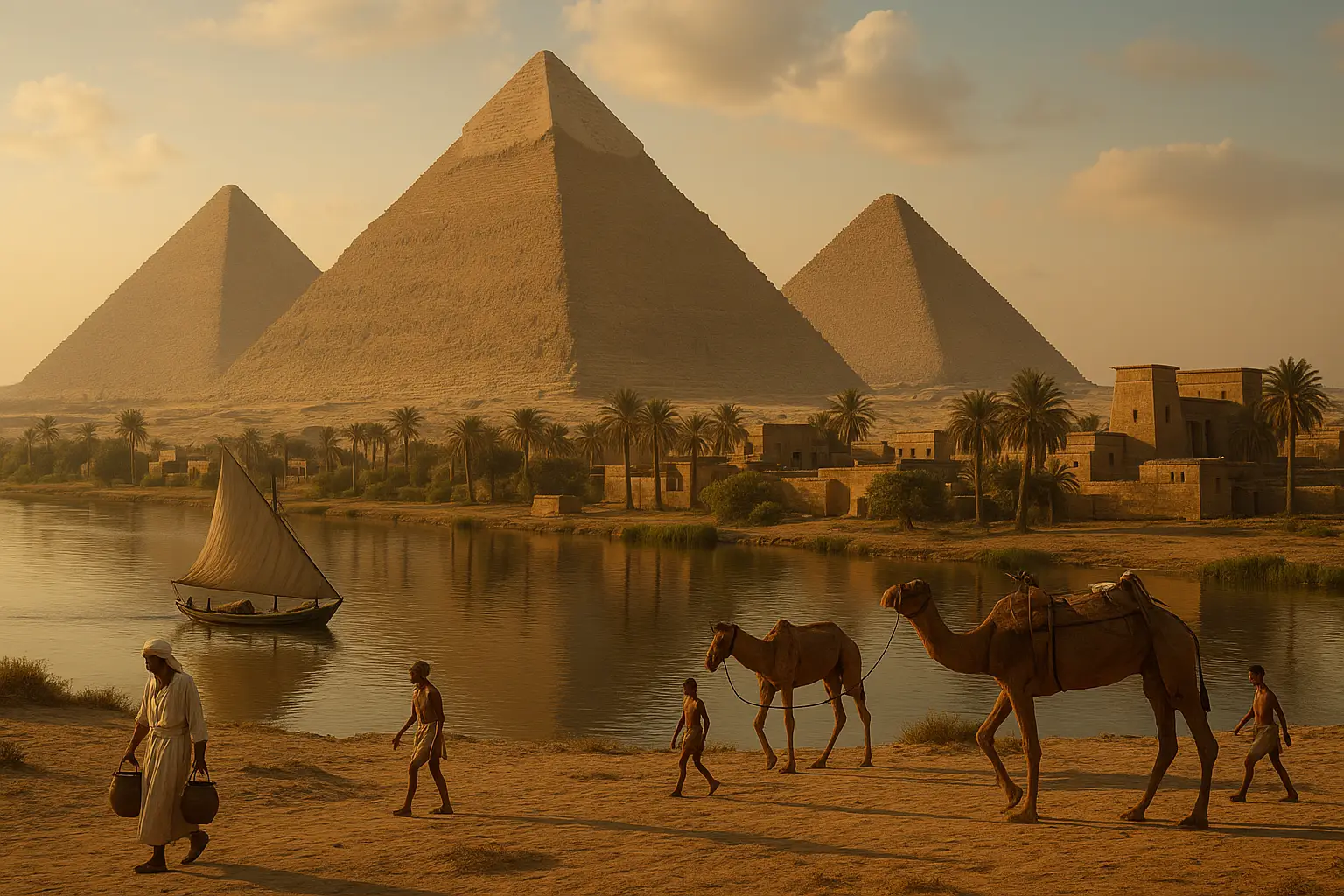
Here’s the thing nobody tells you about ancient Egyptian children: their daily routines were absolutely bonkers, and that’s exactly why modern kids find them so fascinating. We spend so much time focusing on pyramids and pharaohs that we completely miss the comedy gold mine of how Egyptian kids actually lived day-to-day.
Take their morning routine, for instance. Egyptian children started each day by cleaning their teeth with frayed twigs (which actually worked better than you’d think—the fibers acted like natural bristles), then they’d rub their bodies with a mixture of animal fat and crushed beetles for “protection.” And breakfast? Often included beer. Yes, beer. Even for the little ones, because the Nile water was so dodgy that fermented barley was actually safer to drink.
When you tell kids these facts, they don’t just remember them, they become instantly invested in learning more. Suddenly learning about ancient Egypt at Primary School isn’t some dusty textbook chapter. It’s the civilization where kids drank beer for breakfast and brushed their teeth with sticks, and somehow built pyramids that are still standing today. That’s not just educational content—that’s pure teaching gold.
As a teacher you’re probably always looking for ways to make ancient Egypt exciting for students? These incredible school history workshops let kids actually talk to an ancient Egyptian child and solve mysteries together—right from the heart of Egypt itself.
Using AI characters to teach primary school history
Meet Amina, a thoughtful 12-year-old servant girl living in ancient Memphis during Pharaoh Khafre’s reign (2500 BCE). In this thrilling 45-minute classroom adventure, pupils discover what life was really like along the Nile through real-time Q&A with Amina (powered by AI), interactive challenges, and mystery-solving.
Perfect for Key Stage 2, students work in groups to solve an ancient Egyptian mystery while learning about daily life, social structures, and survival from someone who actually lived it. This immersive experience builds historical understanding and critical thinking—all while having absolute fun with their new friend from 4,500 years ago.
It’ll make Primary School history stick (like ancient toothpaste),
Finally, here’s something that’ll blow your mind: those ancient Egyptian kids who brushed their teeth with twigs and drank beer for breakfast? They also invented the world’s first board games, created the earliest known children’s toys (including dolls with movable limbs), and had a school system so advanced that kids were learning geometry, astronomy, and three different writing systems by age 10. The real kicker is that Egyptian children spent their afternoons playing a game called “Senet” that was essentially ancient chess—while modern kids struggle to sit still for a 20-minute lesson. It turns out that when learning feels like play and everyday life is filled with fascinating challenges, children naturally become scholars. Maybe we’ve been overthinking education all along.