When animals stop being pictures
Every primary teacher knows the moment.
You show a photo of a tiger or a shark and the class politely nods. They’ve seen animals before — books, TV, the internet.
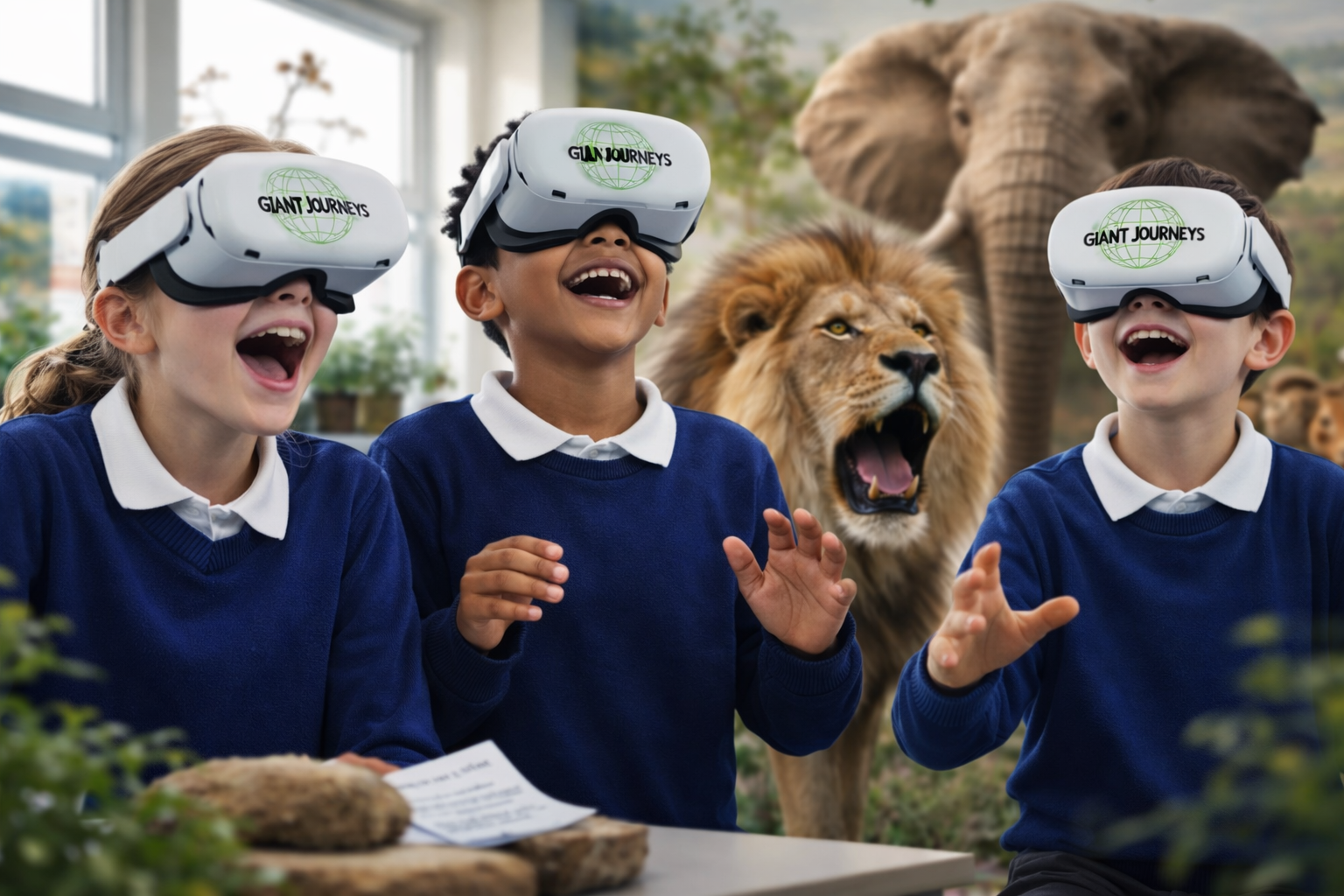
But put that same child face-to-face with the animal, even virtually, and everything changes.
Suddenly the questions come faster than you can answer them.
How big is it?
Would it see me?
Why does it move like that?
That’s the moment curiosity takes over.
The moment pupils forget they’re in a classroom
During one of our early VR wildlife sessions, a pupil stood perfectly still for a few seconds and then whispered, “It’s looking at me.”
In front of them was a huge brown bear — not a video on a screen, but an immersive scene where the animal moved, breathed and shifted its weight just a few metres away.
A minute later the same pupil was asking questions about habitats, food chains and survival in the wild.
Not because someone told them to.
Because they suddenly cared.
And that’s the difference immersive environments make.
The myth about teaching animals in science
There’s a common myth that teaching animals means showing pictures, reading facts and maybe watching a video.
But children understand wildlife far better when they experience movement, scale and environment together.
Seeing how a shark glides through water, how a bear moves through forest terrain, or how an eagle flies across mountains gives context that textbooks simply can’t deliver.
It’s the difference between learning about animals and feeling like you’re briefly sharing their world.
Introducing the Wild Animals VR Workshop
Our wild animals VR workshop for primary schools takes pupils into some of the planet’s most incredible environments.
They’ll encounter animals in their natural habitats — from powerful predators to tiny pollinators — while learning how ecosystems work and why every species plays a role.
The experience blends science, geography and curiosity in a way that feels more like an expedition than a lesson.
Because when pupils feel like explorers rather than spectators, learning sticks.